Delayed release for trusted recipients.
Emergency access keeps release explicit and time-bounded so a trusted recipient gets access only after the delay passes.
Back homeWhen it fits
Use emergency access when the important property is controlled release, not immediate availability.
Delayed handoff
Queue access so it only becomes available after the configured wait period.
Trusted recipient
Release to a named person or group instead of a permanent shared secret.
Auditable release
Keep the flow explicit so the handoff can be reasoned about later.
Release flow
The secret stays unavailable until the configured delay elapses and the release path is triggered.
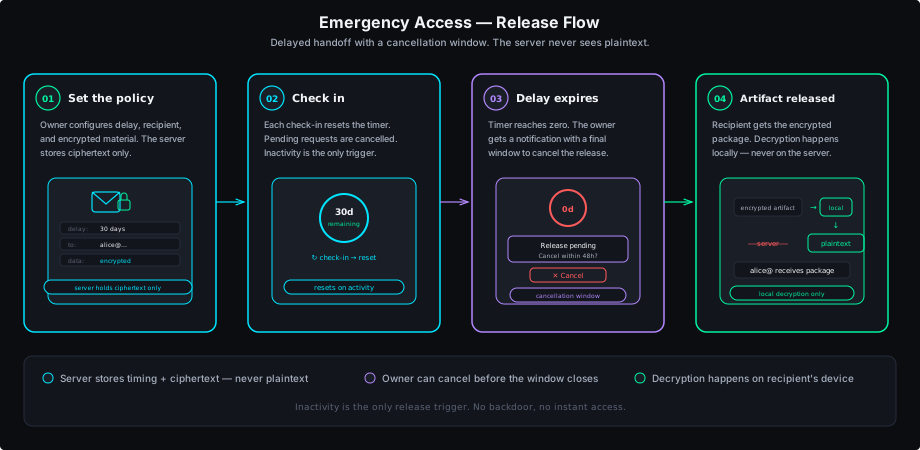
Configure the recipient
Choose who can receive the delayed access and how it should be delivered.
Wait for the delay
The access request remains pending until the timer has elapsed.
Release the secret
Only then does the trusted recipient receive the data.
Release controls
No instant share
The flow is delayed by design so there is no immediate secret handoff.
Explicit release
A release event is required after the wait period completes.
Recipient scope
Access is tied to the named recipient instead of a permanent open share.
Limits and scope
Delayed release is not the same as recovery or escrow.
- A timer does not eliminate the need to trust the recipient.
- It is a controlled release mechanism, not an instant backup path.
- It does not change the underlying vault security model.
Not instant recovery
Emergency access is about delayed release, not instant access restoration.
Use delayed release when the recipient should wait.
The access path stays explicit and time-bounded instead of becoming a permanent shared secret.